Architecture-focused secondary school is an important part of the journey, though it is often overlooked: this is where students learn to connect drawing, space, construction and technical thinking. At university, that foundation expands through more complex projects.
M E N T O R S H I P
Mentorship
From secondary school to university and beyond—a foundation that grows through practice.

What do we want to achieve?
Mentorship begins when a brief is set and follows the work as it develops. Questions and gaps can then be noticed while they can still guide the work, and knowledge from different subjects can be brought together.
How do we work?
01
Starting with the brief

We begin with the assignment you receive at school and follow it through. In our sessions, we read the brief, track the work as it develops and connect it to the knowledge it requires. You can ask about a detail that has stopped you, or about the structure of the whole project. My role is to point out requirements, gaps and consequences; the decisions remain yours—you simply have to be able to defend them.
02
Continuity
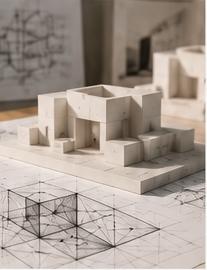
We meet once a week in a group of up to five students from the same year. Each session lasts two hours; when the assignment calls for it, we arrange a four-hour block. Work continues between sessions, and at the next meeting we check how far it has progressed. The group develops a shared language while each person advances their own work.
Individual mentorship is also possible. It too begins with the brief and continues throughout its development. The work is grounded in trust and the stability that continuity brings.
 BRIEF
BRIEF SPACE
SPACE DRAWING
 DECISION
 KNOWLEDGE
Who is it for?
Students
Students of architecture and interior design, including students at the Faculty of Applied Arts. Their specific focus may differ, but both need to understand the house as a whole—from its interior spaces to its relationship with the outside.
Secondary-school pupils
Mentorship is equally intended for students at architecture-focused secondary schools. We follow school assignments and specialist subjects, connect drawing, space and construction, and build a foundation for further study and future professional practice.
Mentorship after university
Mentorship can and should continue into the early years of professional practice. At that stage, it becomes professional support for facing real design and construction responsibilities.
Support is shaped around the role, the task and the conditions of work—whether a young architect works independently, in a design office, within a larger organisation or on site. Conversations about decisions, documentation, coordination and consequences help turn knowledge into confident professional practice.
NOTE
Ask anything that is unclear. You need to work between sessions; otherwise, at the next meeting, there will be nothing to review and move forward.